Spots on glasses, crust on faucets and dry, itchy skin all point to the same thing. Here is how to tell, what it costs you, and what fixes it.
R
Rob
Owner & Master Plumber
November 16, 20266 min read
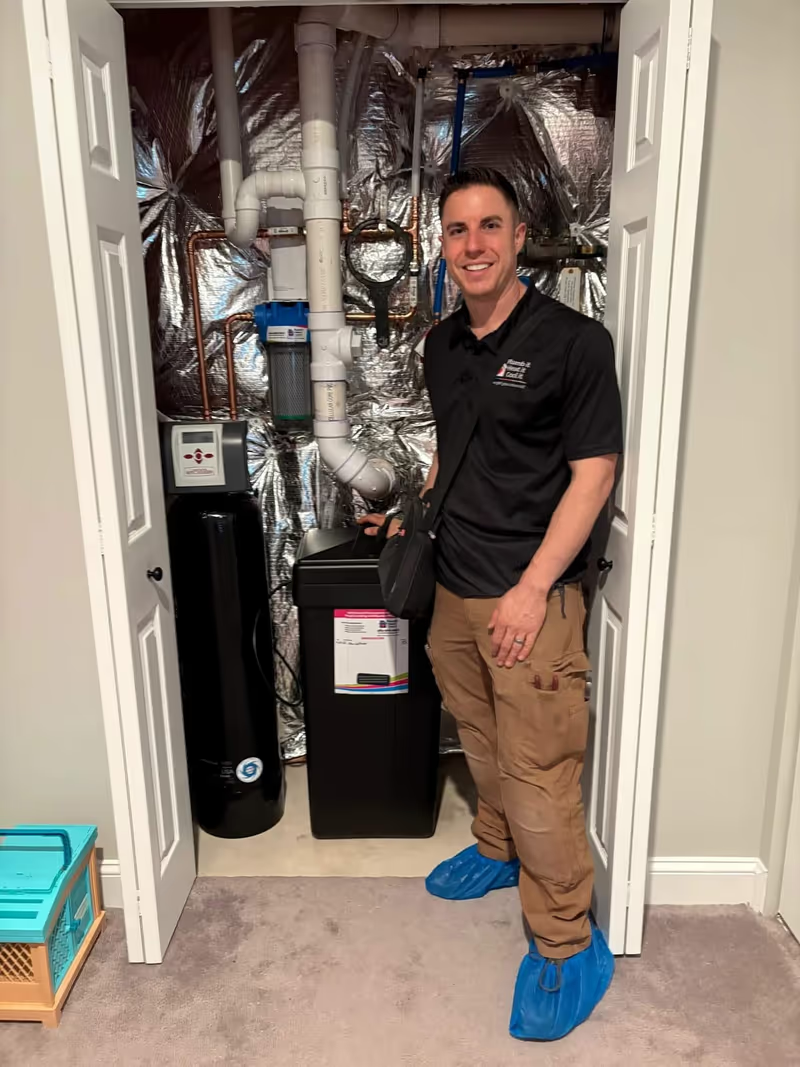
A water softener we installed in a local home.
What Is Hard Water?
Hard water is water with a lot of minerals in it, mostly calcium and magnesium. Our area sits on limestone. As water moves through the rock it picks those minerals up and carries them into your house.
Hard water is not a health problem. It is a house problem. The minerals drop out of the water and stick to whatever the water touches: your faucets, your dishes, your skin, and the inside of your water heater.
7 Signs You Have Hard Water
You do not need a test to spot it. Most people see three or four of these before they ever think about their water.
White spots on glasses and dishes, even right out of the dishwasher.
White or green crust on faucets and shower heads.
Dry, itchy skin and dull hair after a shower.
Soap and shampoo that will not lather, and a film left on the tub.
Stiff, scratchy laundry and towels.
Weak water flow from shower heads and faucets that used to be strong.
A water heater that pops or rumbles, or one that died young.
What Hard Water Does to Your Home
The spots and the crust are the part you can see. The part you cannot see is the same crust building up inside your pipes, your dishwasher, your washing machine and your water heater.
In a water heater the minerals settle in the bottom of the tank. The heat has to fight through that layer, so it costs more to run and it wears out sooner. A water heater is one of the bigger costs in a house, and hard water takes years off of it.
It adds up in small ways too. You use more soap, more shampoo and more detergent, because the minerals stop them from working. Faucets and shower valves wear out early. None of it is a disaster on its own. Together it is money leaving the house every month.
How Hard Is Hard?
Hardness is measured in grains per gallon. The higher the number, the more minerals in the water.
Under 3.5 grains: soft
3.5 to 7 grains: a little hard
7 to 10.5 grains: hard
Over 10.5 grains: very hard
Want to know how hard your water is?
We test it at your home, show you the number, and tell you what it means. Then you decide.
A lot of products say they fix hard water. Only one of them takes the minerals out.
Water softener: Works. It takes the minerals out of all the water coming into the house. This is the real fix.
Shower head filters: Do not soften water. They can cut the chlorine smell, but the minerals go right through.
Magnets and clip-on gadgets: Do not take anything out of the water.
Salt-free conditioners: Do not take the minerals out. Some can cut down on crust in pipes, but you still get the spots and you do not get the soft-water feel.
Vinegar and cleaners: Good for cleaning crust off a faucet. They do nothing for the water.
Start With a Test
Before anyone sells you anything, the water should be tested. A softener is sized to how hard your water is and how many people live in the house. Guessing means you pay for the wrong size.
We test your water at your home, show you the number, and tell you plainly what it means. If your water does not need a softener, we will tell you that too.
Hi, we are Rob and Rachel.
We own Plumb it Heat it Cool it, a family-owned company serving Montgomery and Bucks County. Nobody likes calling a plumber. When you call us, we find the problem, show it to you, and give you the whole price before any work starts.