Plumbing Tips

How to Flush a Water Heater (And How Often)

Flushing clears the mineral grit that builds up in the bottom of the tank. Here are the steps, how often to do it, and when to leave an old tank alone.

R
Rob
Owner & Master Plumber
November 16, 20267 min read
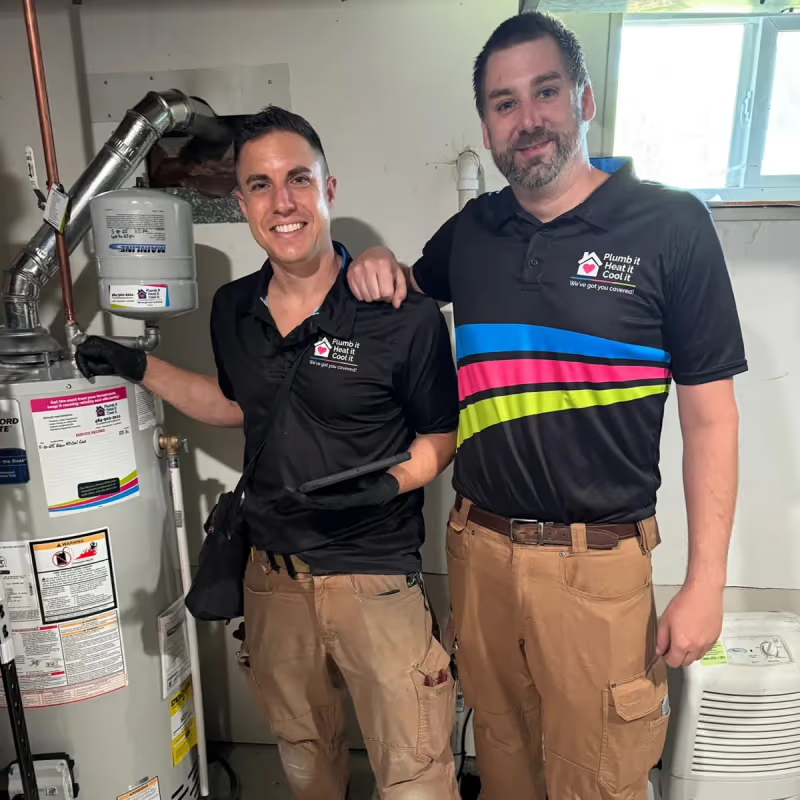
Two Plumb it Heat it Cool it plumbers smiling next to a water heater
Our plumbers on a water heater job in a local basement.

Why Flush a Water Heater?

The water in Montgomery and Bucks County is hard. That means it carries minerals. When the water is heated, those minerals drop out and settle in the bottom of the tank as a layer of grit.

That layer sits between the heat and the water. The tank has to work harder and longer to heat the same water, so it costs more to run. The popping or rumbling sound from an older tank is water trapped under the grit turning to steam. Over the years the extra heat wears out the bottom of the tank, and the water heater dies sooner than it should have.

A water heater is one of the bigger costs in a house. People who want every year out of theirs flush it.

How Often Should You Flush It?

Once a year. With very hard water, twice a year is better. If you have a water softener, once a year is plenty, because the softener takes most of the minerals out before they reach the tank.

How to Flush a Water Heater: 8 Steps

You need a garden hose and a place for the water to go, such as a floor drain or outside. The water will be hot. Plan on about an hour.

  • Step 1: Turn off the heat. On a gas water heater, turn the dial to PILOT. On an electric one, turn the breaker OFF. This matters most on an electric tank. If the power is on while the tank is empty, the heating parts burn out.
  • Step 2: Turn off the water going in. Close the valve on the cold pipe on top of the tank.
  • Step 3: Hook a garden hose to the drain spout near the bottom. Run the other end to a floor drain or outside.
  • Step 4: Open a hot faucet somewhere in the house. This lets air in so the tank can drain.
  • Step 5: Open the drain and let the tank empty. The water may come out cloudy or sandy. That is the grit you are after.
  • Step 6: Turn the cold water back on for a minute with the drain still open. This stirs up what is left. Do it a few times until the water coming out of the hose runs clear.
  • Step 7: Close the drain, take the hose off, and let the tank fill. Leave the hot faucet open until water runs from it in a steady stream with no sputtering. Then close it.
  • Step 8: Turn the heat back on only after the tank is full. On gas, turn the dial back to where it was. On electric, turn the breaker on.

Would you rather not do this yourself?

We flush the tank and check the whole water heater in one visit. Same day service, 7 days a week.

Call 484-902-2111Book Online

When Not to Flush It Yourself

Flushing is not right for every tank. Here is when to stop and think first.

  • The tank is 8 years old or more and has never been flushed. The grit can clog the drain so it will not close again, and now you have a drain that drips. On a very old tank, the grit may be the only thing covering a weak spot.
  • The drain spout is plastic and feels brittle. They snap.
  • You see rust on the tank or water around the bottom. That tank needs to be looked at, not flushed.
  • You are not sure how to turn the gas or power off and on.

Or Have Us Do It

A plumber can flush the tank and check the rest of it in the same visit: the safety valve, the rod inside the tank that fights rust, the pipe connections, and the water pressure in the house. Those checks are what catch a problem before it turns into a puddle on the floor.

We are a family-owned plumbing company serving Montgomery and Bucks County. If we see something, we show it to you and give you the whole price before any work starts.

Rob and Rachel, owners of Plumb it Heat it Cool it

Hi, we are Rob and Rachel.

We own Plumb it Heat it Cool it, a family-owned company serving Montgomery and Bucks County. Nobody likes calling a plumber. When you call us, we find the problem, show it to you, and give you the whole price before any work starts.

Call 484-902-2111Book Online

Related Services

Water Heater ServicesWater Treatment
FAQ

Common Questions

Once a year for most homes. Twice a year if you have very hard water and no water softener.

Mineral grit builds up in the bottom of the tank. It takes longer to heat, costs more to run, starts making popping or rumbling sounds, and wears out sooner.

About an hour for most tanks, including the time it takes to drain and fill back up.

Be careful. On a tank that old, the grit can clog the drain so it will not close again. Have a plumber look at it first. At that age it may be smarter to plan for a new one than to stir up an old tank.

Yes, always. Set a gas water heater to PILOT and turn an electric water heater off at the breaker. Never turn the power back on until the tank is full again.

Keep Reading

Related Articles

Buying Guides

When to Replace a Water Heater: 6 Signs It Is Time

Most tank water heaters last 8 to 12 years. Here are the six signs that yours is near the end, and when a repair is still the right call.

Read more
Cost Guides

How Much Does a Water Softener Cost in Montgomery County, PA?

Real 2026 price ranges for water softeners installed in Montgomery and Bucks County, what actually drives the cost, and how to avoid paying for equipment your water does not need.

Read more
Troubleshooting

Water Heater Leaking? What to Do Right Now

Stop the water first, then find where it is coming from. Where the leak starts tells you if it is a small repair or a tank that is done.

Read more
Ready?

Schedule Your Service Today

Whether it's an emergency or routine maintenance, our team is ready. Book online in 30 seconds or give us a call.

Often same day appointments
No overtime charges
Satisfaction guaranteed
Plumb it Heat it Cool it technician in front of service truck
484-902-2111Book Online